
Quebec's Superior Court Chief Justice Must Resign to Restore the Rule of Law
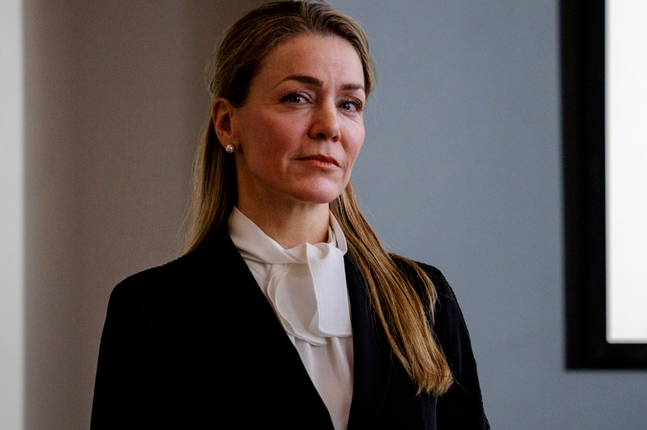


The foundational promise of the Canadian judicial system relies on an unwavering commitment to the rule of law, due process, and absolute freedom from discrimination. In Quebec, the Superior Court of Québec is bound to uphold these principles, governed concurrently by the Quebec Charter and the Quebec Code of Civil Procedure. At the apex of this administrative framework sits Chief Justice Marie-Anne Paquette, whose constitutional and administrative mandate is to ensure that court operations actively comply with these legal structures.
The Breakdown of Due Process in Gatineau
The necessity for accountability becomes starkly clear when examining the alarming trajectory of litigation involving human rights claimant Raymond Carby-Samuels. Originally seeking relief after a Quebec Human Rights Commission (CDPDJ) determination regarding racial profiling by the Gatineau Police Services, Carby-Samuels instead found himself trapped in what has been described as a hostile procedural quagmire in the District of Gatineau.
Crucially, after Justice Hussain declined to declare Carby-Samuels a vexatious litigant, court operations in the Gatineau district appeared to operate in outright defiance of that judicial determination.
Facing a barrage of rampant procedural unfairness and deep-seated institutional hostility, Carby-Samuels formally petitioned Chief Justice Paquette to exercise her administrative authority to transfer his file to the District of Montreal to ensure an impartial venue.
Chief Justice Paquette flatly refused the transfer. Far from remaining a neutral administrative bystander, her office oversaw the removal of Judge Urbas—the presiding judge who had managed the file with proper procedural adherence—and permitted the insertion of Judge Catherine Piché to take over the case.
Institutional Complicity and Judicial Deceit
What followed under Judge Piché’s purview represents a profound violation of the due process guaranteed by the Quebec Charter. In a striking departure from objective fact-finding, Judge Piché openly fabricated assertions in her decision, falsely claiming that Carby-Samuels was pretending to hold a diploma. This blatant falsehood was weaponized alongside a systematic effort to re-interpret historical, unrelated judicial decisions to fit a pre-determined, malicious narrative. The singular goal of this narrative was clear: to bypass Justice Hussain's prior ruling and retroactively brand Carby-Samuels a vexatious litigant, thereby completely canceling his $44,000 CDPDJ-endorsed racial profiling claim.
For a judge to use the power of the bench to lie with impunity in an explicit effort to strip a citizen of their inviolable civil rights is an intolerable subversion of justice. Because Chief Justice Paquette manages the scheduling, venue transfers, and specific judicial assignments of the Superior Court, the targeted assignment of Judge Piché to execute this discriminatory outcome points directly to administrative complicity at the highest level.
A Call for Resignation to Protect the Charter
The Chief Justice of the Quebec Superior Court must be a role model, embodying the highest spirit of non-discrimination and equal access to justice. When a Chief Justice fails to act as a safeguard against institutional bias, ignores formal notifications of rampant local injustice, and presides over a system where judges are permitted to fabricate narratives to penalize marginalized litigants, the office loses its moral authority.

Comments
There are 0 comments on this post