
Carney should lead by example: Rapatriate family business into exclusively Canadian investments

TORONTO -- Canada stands at the threshold of one of the most perilous economic chapters in its modern history. Across our southern border, trade protectionism, aggressive industrial tariffs, and an assertive doctrine of American economic unilateralism threaten the very foundation of Canadian sovereignty. In the face of this reality, Prime Minister Mark Carney has framed his leadership around safeguarding domestic resilience, defending national interests, and mobilizing capital to build Canadian capacity.
Yet an inescapable, glaring contradiction lies at the heart of this national crusade: why are the investments of a Prime Minister of Canada seeking to defend us from Trump's imperialism locked into almost entirely American sectors? While the Prime Minister rallies Canadians to endure trade storms and buy domestic, his personal financial interests remain heavily anchored in a global corporate apparatus whose capital, strategic focus, and loyalties have drifted inexorably toward foreign markets.
To lead Canada with uncompromised moral authority, Prime Minister Carney cannot hide behind legalistic compliance mechanisms. Carney gave us his foreign citizenship, but that didn’t really cost him money. Giving up a second passport protects no Canadian jobs. True leadership demands skin in the game. He needs to lead by example. He must direct his trustees and exert moral suasion to ensure that his legacy wealth is repatriated, forcing Brookfield Asset Management as a family enterprise back into Canadian business ventures.
The Illusion of Blindness
In Ottawa, the established ritual for affluent public office holders is the blind trust. Under the rules overseen by Canada’s Office of the Conflict of Interest and Ethics Commissioner, ministers and prime ministers hand over day-to-day administration of their personal assets to independent trustees.
In theory, this creates an impenetrable firewall between state policy and personal enrichment. In practice, as legal scholars and governance watchdogs like Democracy Watch have repeatedly warned, a blind trust is largely a polite fiction. A public official may not see what trades are made from week to week, but they know what assets went into the vault.
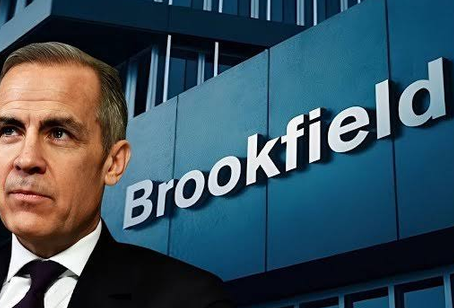
Prime Minister Carney did not enter high office as an ordinary retail investor owning a handful of broad index funds. He served as the board chair and vice-chair of Brookfield, heading its flagship Global Transition Fund and amassing substantial equity options and performance-linked carried interest. Even if trustees execute trades at arm's length, the Prime Minister is intimately aware of how Brookfield makes its money, where its strategic bets lie, and how policy moves in clean energy, infrastructure, and financial regulation affect its bottom line.
To pretend that the Prime Minister is truly "blind" to the destiny of hundreds of thousands of Brookfield options or hundreds of holdings concentrated in American and international giants is to ask the Canadian electorate to suspend basic reason.
Defending Canada with American Capital
The ethical dilemma is exacerbated by Brookfield’s strategic evolution. While founded on Canadian soil and historically celebrated as an emblem of Canadian corporate prowess, Brookfield has steadily reorganized its gravity toward New York and global financial centres.
Brookfield is an asset management behemoth managing nearly a trillion dollars, allocating capital into global real estate, pipelines, utilities, and private credit across continents. A vast portion of its portfolio operates outside Canadian borders, particularly across the United States.
Consider the supreme irony: the leader tasked with defending Canada against American trade aggression and foreign capital dominance maintains personal financial vehicles tied to an entity that thrives by investing elsewhere. Disclosures made through Canada's ethics watchdog revealed a sprawling portfolio where the vast majority of equities held were based in American corporations.
When Canadian workers in manufacturing, agriculture, steel, and technology are urged to brace for economic head-to-heads with Washington, how can the leader of the country justify that his own legacy investments have flourished primarily through non-Canadian growth?
If the Prime Minister truly believes in Canadian economic self-determination, his capital must reflect that conviction.
The Trump Trade War and the Annexation Threat
The urgency of this economic repatriation cannot be overstated. U.S. President Donald Trump has escalated his aggressive economic offensive by signing an executive memorandum targeting Canadian civil government procurement, as documented by The Toronto Star. This aggressive directive orders all U.S. government agencies and departments to identify and completely eradicate Canadian-origin products from a staggering $280 billion USD in federal procurement awards.
This is not a routine trade skirmish; it is an economic siege. As reported by The Globe and Mail and The Economic Times, Trump’s weaponization of tariffs—including his punitive 50 per cent levies on broad categories of Canadian exports and explicit bans on Canadian motor vehicles, dairy, and alcoholic beverages—is clearly designed to dismantle Canada's industrial base. By cutting Canadian businesses out of integrated North American supply chains and blocking access to government contracts, the White House is deploying an imperialistic strategy aimed at the functional economic annexation of Canada. Washington is forcing a choice: submit to American economic hegemony or watch our industrial sectors hollow out.
How can Prime Minister Carney effectively counter an administration seeking to economically colonize Canada when his former firm, Brookfield Asset Management, actively relocated its primary corporate headquarters from Toronto to Manhattan, a controversial move detailed by CBC News and the National Post? To make matters worse, company records show that the board approved this move under Carney’s chairmanship, positioning the company to chase U.S. stock indices and American government contracts just as the trade war loomed.
For the Prime Minister to tolerate his core financial portfolio being directed by an executive suite based at Brookfield Place New York, while Trump systematically locks Canadian products out of the American market, is a profound dereliction of economic duty. The ultimate counter-strategy to Trump's economic aggression must be a defiant declaration of independence, anchored by a total mandate for Canadian corporate control.
The Mandate for Complete Canadian Control
If Canada is to survive this trade war, we must demand a full, institutional retreat from Wall Street. The Prime Minister must lead by issuing a clear directive to his blind trust managers and deploying maximum moral suasion: Brookfield Asset Management must move its central operations out of New York City and return them entirely to a Canadian city—acting under complete, unambiguous Canadian control.
The corporate pretense that moving a primary headquarters to the United States is merely a "technical formality" to appease international index fund investors is no longer acceptable. When a Canadian corporate icon anchors its executive leadership and capital allocation strategies in Manhattan, its corporate worldview aligns with American interests. It begins seeking favour from the very American political establishment that is actively attempting to crush Canadian manufacturing and procurement.
Returning Brookfield's central operations to a Canadian hub like Toronto, Montreal, or Calgary is an act of strategic national defence. Complete Canadian control ensures that a trillion-dollar asset pool is governed by Canadian regulations, aligned with Canadian economic priorities, and insulated from the retaliatory overreach of a hostile foreign government.
A Canadian-directed Brookfield would answer to Canadian stakeholders, pay its primary taxes to domestic coffers, and build an executive class whose primary loyalty is the survival of the Canadian economy.
Strategic Canadian Sectors Brookfield Must Target
Bringing Brookfield home is only the first step; its massive capital deployment must be purposefully redirected. As domestic policy trackers at CP24 and iPolitics have underscored, the scope of the Prime Minister's past executive ties makes capital reallocation an urgent public interest. Trump’s procurement bans and punitive tariffs demand a rapid domestic substitution strategy. Brookfield must aggressively target and bankroll key Canadian sectors to establish long-term economic sovereignty:
- Advanced Clean Energy and Small Modular Reactors (SMRs): As the world pivots toward alternative energy, Canada’s northern and industrial regions require a highly resilient, independent power grid, supported by initiatives through Natural Resources Canada. Brookfield’s specialized Global Transition Funds must pivot away from financing American utilities and instead bankroll the deployment of Canadian nuclear technology, clean hydrogen, and large-scale hydro infrastructure.
- Re-industrialization and Sovereign Manufacturing Capabilities: Decades of offshoring and reliance on vulnerable international supply chains have left Canada exposed to foreign leverage. Working alongside programmes administered by Innovation, Science and Economic Development Canada, Brookfield must pump extensive private equity into rebuilding domestic factories, high-tech assembly operations, and machine-tool production on Canadian soil. This capital must build state-of-the-art facilities capable of meeting our domestic demand for transport equipment, electronics, and heavy machinery without depending on foreign components.
- Artificial Intelligence and Digital Infrastructure: To counter foreign tech dominance, Canada must maintain sovereign control over its data and computational power, expanding partnerships with research networks like the Vector Institute. Brookfield should take the lead in financing state-of-the-art AI compute centres, domestic semiconductor research, and secure telecom infrastructure across the provinces, ensuring Canadian tech enterprises can scale without relying on Silicon Valley or American cloud monopolies.
- Domestic Advanced Manufacturing and Aerospace: Trump's procurement restrictions specifically target heavy machinery and industrial components. Brookfield must step into the vacuum left by retreating American capital, injecting private equity into Canadian manufacturing, steel fabrication, and defence-adjacent aerospace ventures supported by Invest in Canada. This capital will guarantee that domestic transit, infrastructure, and defence projects are supplied exclusively by well-capitalized Canadian factories.
- Urban Infrastructure and Sovereign Housing Funds: A nation cannot fight an economic war abroad if its workforce cannot afford to live at home. Brookfield must redirect its massive real estate and infrastructure divisions toward capitalizing domestic high-density housing, modern transit corridors, and deep-water port expansions under frameworks established by the Canada Infrastructure Bank. This strategy will optimize domestic logistics and insulate Canadian commerce from border disruptions.
The Problem with Bureaucratic Screens
Supporters will counter that Prime Minister Carney has adhered strictly to the law by establishing internal conflict-of-interest screens managed by top officials in the Privy Council Office. These screens are intended to disqualify him from participating in any government decisions directly impacting Brookfield or other related corporate holdings.
Yet this bureaucratic remedy creates an untenable governance paradox:
- Executive Paralysis: The Prime Minister is the central decision-maker on national strategy. If government plans for massive green infrastructure, artificial intelligence compute centres, nuclear development, and sovereign investment partnerships must navigate around Brookfield's vast tentacles, Canada is left with a Prime Minister who is either sidelined from pivotal decisions or walking an ethical tightrope.
- The "Maple Fund" Contradiction: When the federal government partners with major pension funds and private managers—including Brookfield—under ambitious initiatives like domestic investment summits and sovereign infrastructure frameworks coordinated through CPP Investments, the public cannot be assured of complete impartiality when the Prime Minister’s future bonuses or deferred shares are linked to the firm’s aggregate valuation.
- Oversight Limits: Parliamentary committees have already raised red flags over the breadth of these screens, pointing out that senior public servants cannot realistically monitor thousands of subsidiaries and complex financial funds without full operational visibility.
The solution cannot be more bureaucratic memos or recusal declarations. The solution must be structural, transparent, and direct.
A Mandate to Repatriate
Critics frequently point to recommendations by the House of Commons Standing Committee on Access to Information, Privacy and Ethics, which has debated whether prime ministers should be legally mandated to divest all controlled assets through outright liquidation rather than relying on blind trusts. While a full, immediate sale of illiquid carried-interest funds and long-dated options carries complex legal and contractual barriers, an active Prime Minister is not powerless.
As critical coverage in CityNews Montreal and official filings published on OurCommons demonstrate, growing numbers of parliamentarians and civic groups are demanding an end to these loopholes. Prime Minister Carney must take a decisive, public step: instruct his trustees to restructure his personal wealth mandate and formally urge Brookfield's corporate leadership to recommit their domestic deployable capital directly into Canadian businesses.
- Repatriate Personal Asset Exposure: The trustees of the blind trust should be given an unequivocal fiduciary objective: systematically rotate out of foreign equity holdings and reinvest exclusively into domestic ventures, Canadian small-to-medium businesses, and domestic sovereign bonds. If ordinary Canadians are expected to stake their livelihoods on the domestic economy, the head of government must do the same.
- Challenge Canadian Institutional Capital: As the former institutional leader of Brookfield, Carney commands immense respect within the firm's executive corridors. He should use his platform to call on Brookfield to direct meaningful proportions of its infrastructure and transition funds into Canada’s domestic industrial renewal. Rather than financing outbound acquisitions, Brookfield should lead the capitalization of Canadian critical minerals, northern infrastructure, advanced clean tech, and housing construction.
- Establish Complete Transparency: Where contractual obligations prevent the immediate disposal of options or transition fund carried-interest units, their full eventual yields should be pledged to a blind philanthropic foundation supporting Canadian technical colleges, public research, and domestic enterprise development.
Leadership Begins by Example
History remembers leaders who align their personal interests with the trials of the people they serve. In times of national economic strain, public confidence is an irreplaceable currency. When citizens suspect that their political elites navigate macroeconomic storms insulated by international equities and corporate windfalls, the social fabric frays.
Canada does not need a technocratic leader who treats ethical responsibility merely as a box-ticking exercise against the letter of the Conflict of Interest Act. Canada needs a leader who understands the spirit of national unity and economic duty.
Prime Minister Carney has the intellect, the international stature, and the stated desire to champion Canada against mounting external aggression. But to truly rally the nation behind an agenda of Canadian independence and domestic strength, he must put his own house in order.
It is time to dismantle the convenient pretense of the blind trust, bring that capital home, force Brookfield back under absolute Canadian control, and demonstrate that the future of Canadian business is worth betting on—starting with his own.

Comments
There are 0 comments on this post