
Carney's push for Canadian data centres run into community resistance

OTTAWA — There is a predictable, almost comforting rhythm to the way Ottawa rolls out its grand industrial strategies. First come the sweeping ministerial press releases, complete with slick corporate logos and high-tech backdrops. Then comes Prime Minister Mark Carney’s signature economic pitch: Canada, blessed with cool northern air, vast geography, and historically clean power grids, is uniquely positioned to become the ultimate safe haven for Silicon Valley’s insatiable compute infrastructure.
But as the federal government is discovering, it is one thing to draw up an AI roadmap in an air-conditioned boardroom in the West Block. It is quite another to build it in the backyard of an angry municipal council in southern Ontario.
Across the country, and particularly within the economic engine of the Greater Toronto Area, the Liberal government’s aggressive push to fast-track hyperscale data centres is running into a wall of community and regulatory resistance. What was pitched as a friction-free transition to a high-value knowledge economy has instead triggered a fierce, ground-level debate over resource stewardship, infrastructure equity, and who truly benefits when trillion-dollar tech giants set up shop. From the tech corridors of Guelph to the industrial parks of Mississauga and Vaughan, the message from local communities is becoming deafening: Canada’s resources are not an infinite buffet for Big Tech.
The growing friction is not born of reflexive nimbyism. It is rooted in basic arithmetic and the hard constraints of physics.
Consider the sheer scale of the electricity demand. According to recent projections from Ontario’s Independent Electricity System Operator (IESO), data centres are on track to drive roughly 13 per cent of all new electricity demand in the province by 2035. A single modern hyperscale AI facility can consume as much electricity as a mid-sized Canadian city. This massive surge in demand arrives at the exact moment Ontario is already struggling to electrify its automotive manufacturing sector, expand its public transit networks, and accommodate a rapidly growing population.
In municipalities like Mississauga and Oakville, local leaders are drawing a line in the sand. Councils have actively implemented moratoriums and zoning pauses on new data centre developments, precisely because the local utility infrastructure cannot handle the sudden load without risking regional reliability. Ratepayers are right to ask why their local distribution companies should prioritize upgrading a sub-station for an American tech conglomerate over connecting new housing developments or local businesses. If the federal government pushes utilities to absorb these multi-million-dollar capital upgrades, local households will inevitably face rising utility rates to cover the bill.
Then there is the quiet crisis of water scarcity, a point of particular tension in environmental hubs like Guelph. To keep high-density AI chips from melting, traditional data centres rely on evaporative cooling towers that drink millions of litres of freshwater every single day. Dropping these massive infrastructure projects directly over ecologically sensitive aquifers, like the Amabel aquifer that sustains portions of Wellington County, is an environmental gamble that many locals refuse to accept. In an era where climate volatility makes long-term water security a top-tier regional concern, exporting precious Canadian freshwater so an algorithm can generate video clips slightly faster is an incredibly tough sell to local residents and conservation authorities.
The environmental hypocrisy of the current gold rush runs deeper still. To meet aggressive deployment timelines, some developers are bypassing long-term clean energy planning in favour of immediate fixes. When grid connections face multi-year delays, operators frequently look to connect directly to natural gas lines or install massive arrays of diesel backup generators to ensure uninterrupted uptime. The irony is stark: an AI buildout championed by a climate-conscious federal government risks actively derailing municipal and provincial greenhouse gas reduction targets, replacing green aspirations with localized fossil-fuel reliance.
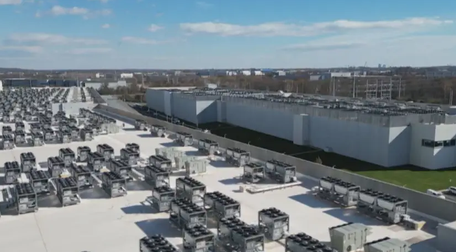
For the people who live down the street from these digital warehouses, the impact is visceral. A data centre is not a typical office park. It is a monolithic, windowless concrete fortress surrounded by security fencing. The constant, low-frequency hum of industrial cooling fans and chillers creates a persistent noise pollution that travels for kilometres, leading to sleep disruption and community fatigue in nearby residential subdivisions. Furthermore, these campuses require dozens of acres of flat land, frequently encroaching on prime agricultural fields or urban greenbelts, permanently altering the character of rural and suburban landscapes.
Perhaps the most glaring political vulnerability for the Carney government is the stark imbalance in job creation. The economic narrative of the tech boom relies heavily on the promise of employment. Yet, while building a data centre creates a temporary, highly visible spike in local construction and trade jobs, a completed, multi-hundred-million-dollar hyperscale facility typically requires only a few dozen permanent staff to run it—mostly security guards, facilities managers, and basic technicians. For local communities, it feels like an uneven trade: they absorb the environmental, noise, and infrastructure stress, while the high-paying software engineering jobs and corporate dividends fly straight back to California.
If the Carney government wants to salvage its AI infrastructure dream, it must pivot from a policy of federal decree to one of strictly enforced responsibility. The days of treating municipal resources as free inputs for global technology companies must come to an end.
Ottawa must work directly with provincial regulators to mandate a "bring-your-own-power" model for any data centre exceeding a specific megawatt threshold. Tech giants should be legally required to fund or build their own zero-emission renewable energy generation—whether that means contracting massive off-grid solar arrays, wind farms, or making direct investments in next-generation small modular reactors. This approach ensures that regional ratepayers are entirely shielded from the capital costs of upgrading the broader provincial grid.
On the environmental front, the use of potable tap water for evaporative cooling should be flatly prohibited by provincial policy. Regulators must enforce closed-loop chilled water systems, direct-to-chip liquid cooling, or dielectric immersion technologies that eliminate continuous evaporation entirely. Furthermore, developers must be forced to integrate waste-heat recovery systems. Channeling the immense thermal exhaust from servers into municipal district heating networks or commercial greenhouses would turn a localized nuisance into a community asset.
To ease local land friction, zoning approvals should strictly favour brownfield redevelopment—decommissioned factories, old paper mills, and industrial parks with existing utility corridors—rather than paving over pristine greenfields or agricultural land. Strict acoustic baffles and mandatory setback distances must be legally enforced to protect residential peace.
Most importantly, Canada must normalize the use of legally binding Community Benefit Agreements (CBAs). If a tech company wants access to Canadian stability and land, it must guarantee dedicated civic infrastructure funding, park restoration projects, and high-performance compute allocations for local research universities and hospitals.
The AI revolution is happening, and Canada cannot afford to sit it out. But national prosperity cannot be built on the backs of overburdened municipalities. If Ottawa fails to protect local communities from the collateral damage of the data boom, public backlash will shut down the server farms before they even have a chance to plug in.

Comments
There are 0 comments on this post