
Supreme Court of Canada perpetrates systemic racism against Black Canadians
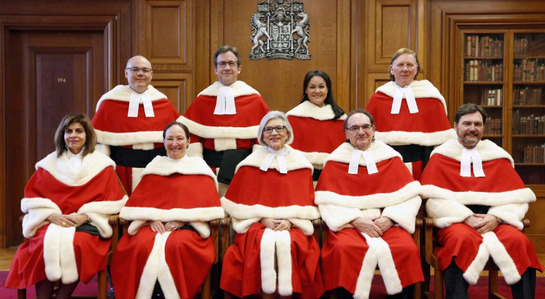


When Canadians talk about systemic racism in the justice system, the conversation often focuses on the front lines: policing, arbitrary stops, and disproportionate rates of incarceration. But systemic bias does not stop at the prison gates, nor does it dissolve in the lower courts. It reaches all the way to the highest court in the land. For decades, the Supreme Court of Canada has maintained a damaging blind spot when it comes to the lived realities of Black Canadians, reinforcing a multi-tiered legal framework that perpetrates systemic racism across every single layer of the court system.
The issue is not just a lack of representation on the high bench—though the Supreme Court has still never seen a Black justice in its entire history. The deeper crisis lies in the fact that the Supreme Court actively validates and shields a hierarchy of racism operating at the municipal, provincial, and appellate levels. Since the publishing and implementation of Canada’s Black Justice Strategy, the highest court has failed to demonstrate at any level that it takes the framework seriously. The total absence of Black representation on the high court continues to endorse an institutional prism of racial exclusion—a prism that the judiciary has seen no fit to modify because it mirrors the systemic bias embedded within the nation's political leadership.
This legal and executive gridlock is deeply rooted in the very institutions tasked with appointing judges. Successive Prime Minister’s Offices and Privy Councils operate within their own prism of racism. One need look no further than the shocking internal report authored by Dr. Rachel Zellars and leaked through Access to Information, which exposed a toxic culture at the apex of Canada’s public service. The Safe Space report detailed a "cesspool of racism" within the Privy Council Office (PCO)—the administrative arm serving the Prime Minister and Cabinet—revealing that white executives and managers routinely used the N-word comfortably in the presence of Black employees.
When Black Canadians attempt to hold this political infrastructure accountable through the courts, they encounter a closed loop. A prominent example is the historic, multi-billion-dollar systemic discrimination class action (Thompson v. Canada) brought on behalf of thousands of Black public servants. The lawsuit sought restitution for decades of systemic exclusion in hiring and promotions. However, the Federal Court of Canada dismissed and struck down the class action, ruling it "unsuitable" for class certification. This creates an intolerable paradox: the judges sitting on the Federal Court benches are vetted and appointed by the very political actors—the PMO and the Privy Council Office—accused of harboring rampant anti-Black racism.
This administrative gatekeeping trickles downward, deeply infecting how the court handles street-level realities. On the criminal side, the Supreme Court has insulated a racist pipeline that begins with over-policing. Section 9 of the Canadian Charter of Rights and Freedoms protects against arbitrary detention, yet for decades, the legal tests developed by the Supreme Court assumed a baseline citizen who feels safe enough to simply walk away from a police officer. For Black Canadians facing carding and racial profiling, walking away is a dangerous luxury. By refusing to adapt its precedents to the realities highlighted by the Black Justice Strategy, the court effectively signals to provincial courts and local police forces that anti-Black racism is a peripheral concern rather than a core constitutional violation.
The Supreme Court has fared even worse on the civil side, where it operates as an institutional shield for the systemic racism perpetrated by lower-court judges. In civil litigation, the highest court repeatedly uses its leave-to-appeal mechanism to ignore egregious human rights violations and judicial misconduct taking place at the trial level.
A prominent example of this institutional neglect occurred in the protracted legal battle involving the late Dezrin Carby-Samuels and her son. In 2017, family law and civil litigation reached a crisis point in the Ontario Superior Court in Ottawa. Litigants argued that orders issued by Justice Sylvia Corthorn—and overseen administratively by Regional Senior Judge Robert Beaudoin—amounted to an abuse of process that effectively isolated an elderly, disabled Black woman from her supportive family networks, a devastating isolation suspected of accelerating her premature death. When these severe allegations of lower-court irregularities and extra-judicial overreach were brought to the Supreme Court of Canada via an application for leave to appeal, the highest court completely ignored the crisis, dismissing the case without providing reasons—a bureaucratic wall that insulates trial-level judicial bias from accountability.
This pattern of structural racism repeating at all levels of the judiciary became further evident in the subsequent civil action, Carby-Samuels v. Ville de Gatineau. In that case, an English-speaking Black litigant challenged the Quebec Human Rights Tribunal and Superior Court's refusal to provide state-funded English translation services during a civil human rights proceeding. The case directly exposed how systemic racism operates administratively: by forcing self-represented, racialised individuals to navigate complex jurisdictional hurdles without linguistic accommodation, the lower courts effectively choke out civil human rights claims before they can ever be heard on their merits. When this compounding barrier of racial profiling and language discrimination was escalated to Ottawa, the Supreme Court of Canada once again slammed the door, dismissing the applications for leave to appeal.
Ultimately, the failure to secure justice—whether fighting an arbitrary criminal charge, seeking a civil remedy, or trying to hold a racist public service accountable—is a direct consequence of a decision-making process engineered at every tier of the Canadian establishment. The systemic exclusion of highly qualified Black lawyers and appellate judges from the Supreme Court selection process is not an accident; it is a defensive mechanism designed to protect a compromised structure. Until the Supreme Court of Canada takes accountability for the racism it perpetrates at all levels by breaking its prism of exclusion, reforming its gatekeeping mechanisms, and diversifying its bench, the promise of equal access to justice will remain a hollow illusion for Black Canadians.

Comments
There are 0 comments on this post