
RCMP refuses to stop subjecting Indigenous people to abuse and harassment
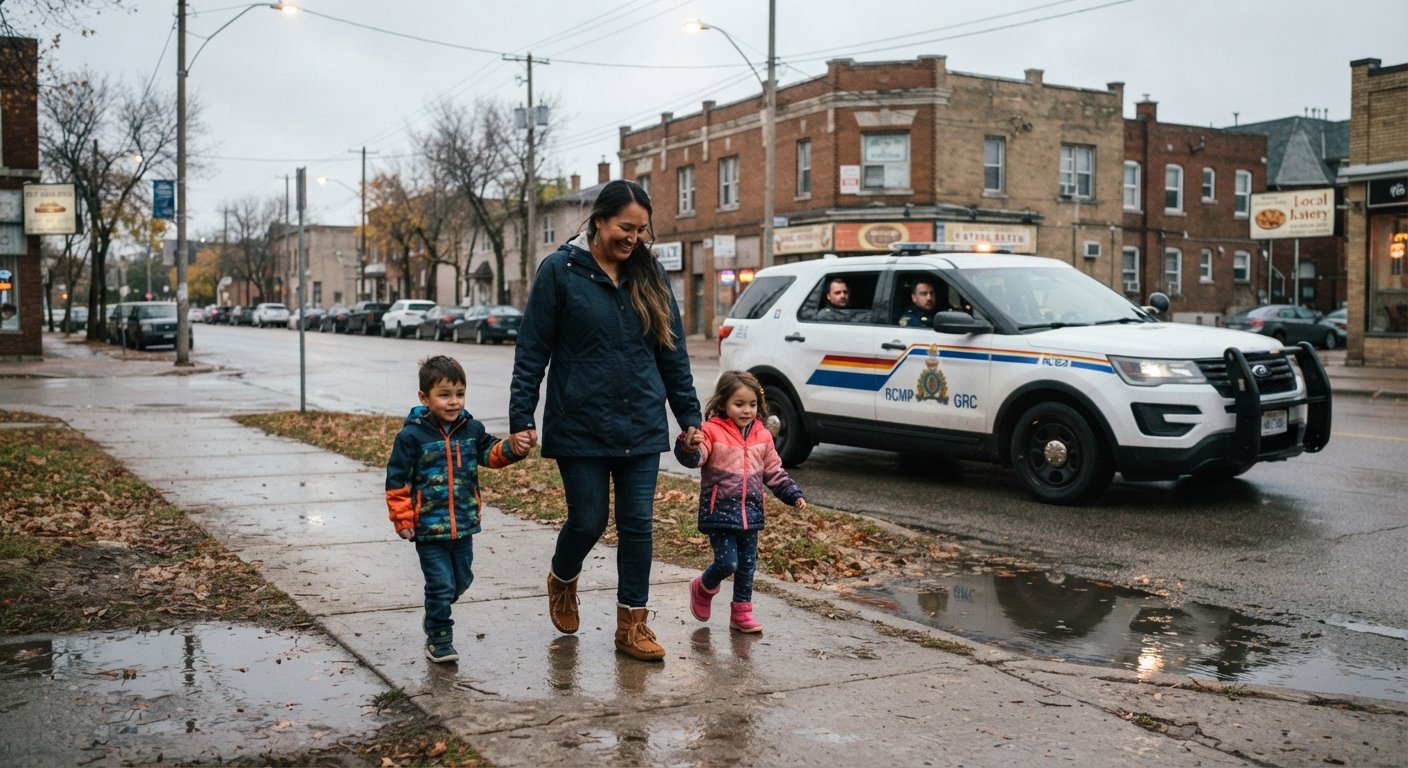

OTTAWA — When Josie Faucher questioned Royal Canadian Mounted Police (RCMP) officers during a roadside encounter on August 4, 2023, she expected her rights as a woman and a citizen to be respected. Instead, the Mohawk First Nations woman found herself trapped in what she describes as a terrifying cycle of physical force, medical neglect, and overt spiritual degradation. Her experience has now become the focal point of a high-profile human rights complaint, Josie Faucher v. RCMP (Case File: HR-DP-3297-26), which exposes a yawning chasm between the Canadian government’s rhetoric on reconciliation and the lived reality of Indigenous people interacting with the national police force.
"I was left questioning whether the institution was willing to acknowledge the treatment I described," Faucher stated during a recent interview, recounting the painful aftermath of an interaction that she maintains stripped her of her safety, her physical health, and her basic human dignity.
According to her formal legal filings with the Canadian Human Rights Tribunal, the incident escalated rapidly after Faucher asserted her right to equal treatment. While attempting to use her cellphone to record the encounter for her own protection—a right routinely affirmed by legal experts across Canada—the responding officers allegedly characterized the device as a weapon. Faucher was then forcibly removed from her vehicle while her seatbelt was still fastened, placed in handcuffs, and confined within a police cruiser.
The physical trauma of the extraction was severely compounded by the officers’ alleged failure to accommodate Faucher’s complex physical disabilities. Living with spinal stenosis, chronic spinal and neck pain, involuntary muscle spasms, and Complex Post-Traumatic Stress Disorder (CPTSD), Faucher began experiencing agonizing, visible muscle spasms during the confrontation. Rather than receiving medical assistance, empathy, or standard operational understanding, Faucher reports that her physical distress was weaponized against her, treated by officers as suspicious or intentionally non-compliant behavior.
Yet, it was what transpired inside the rear of the police cruiser that Faucher describes as one of the most deeply disturbing violations of her identity. Terrified, in physical agony, and seeking psychological comfort, she began quietly praying to the Creator—a peaceful, sacred practice deeply rooted in her Mohawk heritage and her spiritual connection to nature and humanity.
According to Faucher, the responding officers overtly mocked her faith, accusing her of "casting a spell" or using words to that exact effect.
"Prayer was my way of seeking strength, guidance, and protection during an extremely frightening experience," Faucher explained, noting how deeply upsetting it was to have a peaceful act of religious expression portrayed as sinister, threatening, or superstitious.
Faucher’s case arrives at a critical juncture in Canadian history, serving as a microcosmic view of a macrocosmic crisis. For decades, royal commissions, national inquiries, and public promises of institutional transformation have promised a new dawn for Indigenous-police relations. Yet, Faucher’s case argues that beneath the modern public relations campaigns lies a deeply entrenched structural refusal to change.
Part I: The Roadside Escalation and the De-escalation Deficit
The events of August 4, 2023, begin not with an allegation of criminal activity, but with a routine traffic stop—a common point of contact where systemic biases often manifest. For many Canadians, a traffic stop is a minor inconvenience; for Indigenous people, particularly women, it is frequently a site of intense anxiety, historically tied to disproportionate rates of violence, surveillance, and over-policing.
When Faucher chose to question the officers' instructions and voice her expectations regarding her dignity as a woman, she was exercising a democratic right. In a healthy civic society, law enforcement officers are trained to de-escalate verbal friction, clarify instructions, and assure citizens of their safety. According to Faucher’s accounts, the response she received was the exact inverse of de-escalation.
The characterization of her cellphone as a "weapon" represents a recurring flashpoint in contemporary Canadian policing. Across the country, citizens possess the legal right to record police officers in the execution of their public duties, provided they do not obstruct justice. For marginalized individuals, a cellphone camera is often their only objective witness—a tool to ensure accountability in real-time. By reframing a piece of recording technology as an active threat, the responding officers effectively stripped Faucher of her ability to document the interaction, creating an immediate imbalance of power.
What followed was a physical intervention that defied basic safety protocols. Pulling a driver out of a vehicle while their seatbelt remains buckled is an action that carries a high risk of acute physical injury, particularly to the torso, neck, and spine. For an individual already navigating severe spinal degeneration, such force is catastrophic. Faucher’s accounts describe a scene devoid of tactical necessity, characterized instead by a punitive application of physical dominance designed to enforce immediate submission.
The use of handcuffs on an individual who is visibly distressed and presenting no active physical threat speaks to a broader cultural reliance within the RCMP on hyper-militarized tactics. Handcuffing is not a neutral act; it is a profound restriction of physical autonomy that can trigger severe psychological distress, particularly in individuals living with pre-existing trauma. For Faucher, the metal restraints were not merely a tool of detention—they were the physical manifestation of an institution refusing to see her humanity.
Part II: The Invisible Crisis of Medical and Disability Misalignment
The intersection of race, gender, and disability creates a unique matrix of vulnerability that public institutions are legally mandated to recognize and accommodate. Under the Canadian Human Rights Act, federal entities—including the RCMP—are required to provide reasonable accommodation to individuals with physical and mental disabilities. This mandate is not a courtesy; it is a legally binding obligation.
Faucher’s medical profile is complex, requiring careful physical management. Spinal stenosis is a degenerative condition characterized by the narrowing of the spaces within the spine, which can put intense pressure on the spinal cord and nerves. This condition results in chronic, debilitating pain and leaves the individual highly susceptible to severe, involuntary muscle spasms when subjected to physical trauma or acute stress. When coupled with CPTSD—a condition that fundamentally alters the nervous system's response to perceived threats—the physiological impact of a high-stress police encounter is immense.
+----------------------------------------------------------------------------+

|                       JOSIE FAUCHER v. RCMP (HR-DP-3297-26)                |
|               Core Protected Grounds Invoked Under Human Rights Complaint |
+----------------------------------------------------------------------------+

|  1. National / Ethnic Origin | Mohawk First Nations identity.              |
|  2. Sex                      | Demand for dignity and equal treatment.      |
|  3. Disability               | Spinal stenosis, chronic pain, and CPTSD.   |
|  4. Religion                 | Traditional prayer characterized as a spell.|
+----------------------------------------------------------------------------+
During the encounter, Faucher's body reacted predictably to the physical force and psychological terror of the situation. Her muscles locked into painful, visible spasms. Yet, according to her complaint, the officers did not see a medical emergency unfolding; they saw a behavioral problem.
This misinterpretation—viewing physiological distress or trauma responses as active resistance or non-compliance—is a documented flaw in modern policing infrastructure. When an officer is trained primarily in compliance-based frameworks, any deviation from absolute, instantaneous physical submission is interpreted as a threat. A person freezing from CPTSD, or writhing in pain from a spinal spasm, is frequently miscategorized as "resisting arrest."
By failing to recognize her physical symptoms and dismissing her declarations of medical vulnerability, the officers effectively transformed her disabilities into a justification for continued harsh treatment. Rather than adjusting their approach to accommodate her physical limitations, the force applied remained rigid, indifferent to the agonizing impact it was having on her compromised spine. This failure forms a core pillar of her case, raising serious questions about whether the national police force possesses the basic competency required to interact safely with disabled citizens.
Part III: The Weaponization of Faith and the Echoes of Colonialism
While the physical injuries Faucher sustained speak to tactical failures, the spiritual abuse she describes inside the police cruiser cuts to the very heart of historical colonial violence in Canada. The accusation that a Mohawk woman praying to the Creator was "casting a spell" is not merely an isolated insult; it is a contemporary manifestation of a centuries-old state campaign to criminalize, denigrate, and eradicate Indigenous spirituality.
For the Mohawk people, and many First Nations cultures across Turtle Island, prayer to the Creator is not a performance or an esoteric ritual. It is a foundational, living framework of governance, survival, and relationship with the cosmos. It is an act of grounding, utilized in moments of profound suffering to maintain psychological coherence and spiritual alignment. When Faucher turned to prayer in the back of that cruiser, she was drawing upon a deep well of ancestral resilience to survive a terrifying experience.
To have that sacred act reframed by state actors as something malicious, threatening, or akin to witchcraft is a profound violation. It reveals an institutional culture that continues to view Indigenous identity through an orientalist, fearful, and deeply prejudiced lens. By labeling her prayers as a "spell," the officers effectively demonized her faith, transforming an act of peaceful religious devotion into a sinister, non-Western threat that justified their hostility.
       +-------------------------------------------------------+

       |             HISTORICAL CONTINUUM OF HARM             |
       +-------------------------------------------------------+

       |  19th-20th Century:                                   |
       |  - Potlatch Ban & Anti-Injunction Laws                |
       |  - Criminalization of Traditional Spiritual Practices |
       |  - Enforced erasure via Residential School System    |
       +-------------------------------------------------------+
                                  |
                                  v
       +-------------------------------------------------------+

       |  Modern Manifestation (August 4, 2023):               |
       |  - Traditional prayer labeled as "casting a spell"    |
       |  - Indigenous faith criminalized as a tactical threat |
       |  - Persistent structural bias in roadside policing    |
       +-------------------------------------------------------+
This specific component of Faucher’s case highlights a systemic blind spot within federal oversight mechanisms. While Canadian law explicitly protects freedom of religion, those protections have historically been applied unevenly, prioritizing Eurocentric, institutionalized faiths while treating Indigenous spiritual practices as cultural artifacts rather than legally protected religious observances. Faucher's insistence that her religion remain a central pillar of the Tribunal's examination is a direct challenge to this double standard. It demands that the Canadian legal system recognize a Mohawk woman's prayer to the Creator with the exact same legal reverence, protection, and weight afforded to any mainstream Western religious tradition.
Part IV: The Failure of Internal Redress and Institutional Gaslighting
The trauma of Faucher’s experience did not conclude when her handcuffs were removed. For many survivors of police misconduct, the secondary injury inflicted by the administrative systems designed to handle complaints is often as damaging as the initial encounter.
Following the August 4 incident, Faucher engaged with the formal internal mechanisms of the RCMP to report her treatment. She provided objective medical evidence documenting her spinal conditions, her chronic pain diagnoses, and the physical fallout of the extraction. She detailed the verbal degradation she experienced regarding her prayers and her gender.
The institutional response she received, however, followed a well-documented pattern of corporate self-protection. According to Faucher, the RCMP's review process systematically discounted her medical evidence, treated her credibility with overt skepticism, and consistently doubled down on the narrative that her cellphone constituted an active weapon. Instead of an impartial investigation aimed at uncovering operational failures, Faucher felt she encountered a defensive legal bureaucracy designed to shield its officers from accountability and minimize organizational liability.
This process is frequently described by advocacy groups as institutional gaslighting. When a victim of state violence provides clear, documented evidence of harm, only to have that evidence ignored or reinterpreted by the state to justify the officers' actions, the psychological impact is devastating. It leaves the complainant feeling entirely isolated, reinforcing the belief that the system is structurally incapable of policing itself.
The RCMP’s internal complaint structure has long faced criticism from legal scholars and civil liberties organizations. Because the initial stages of investigation are largely managed internally, or reviewed by bodies lacking robust enforcement teeth, the process inherently favors the institutional narrative. For Faucher, this bureaucratic wall compounded the original harm, leaving her to realize that true justice could never be achieved through the very institution that had inflicted the injury. Her turn to the Canadian Human Rights Tribunal represents a necessary escalation—an attempt to force an external, independent legal entity to peer behind the RCMP's curtain.
Part V: The Pre-Existing Vulnerability and the Deficit of Protection
To fully comprehend the depth of the failure in Faucher’s case, one must examine the context that preceded the August 4 encounter. Faucher’s interaction with the law enforcement apparatus did not happen in a vacuum; it occurred against a backdrop of her repeated, exhaustive attempts to secure police protection from external threats.
Prior to this incident, Faucher had compiled extensive documentation detailing ongoing stalking, systemic harassment, and explicit threatening communications directed at her safety. She had reached out to multiple police jurisdictions across various boundaries, fulfilling every civic duty expected of a victim of crime. She provided names, timelines, and evidence, asking for the basic protection that the Canadian state promises to all its residents.
The response she received across these jurisdictions was a profound administrative silence. Her reports were treated with indifference, her files bounced from one department to another, and no meaningful investigation was launched to secure her safety. This systemic inaction left her acutely vulnerable, forced to navigate an ongoing safety crisis without the institutional shield that her tax dollars fund.
+----------------------------------------------------------------------------+

|                        THE SYSTEMIC IMPACT CYCLE                           |
+----------------------------------------------------------------------------+

|  1. THE PRE-CRISIS NEED:                                                   |
|     - Complainant reports severe stalking and threatening communications.  |
|     - Seeks protection across multiple police jurisdictions.               |
|                                                                            |
|  2. THE INSTITUTIONAL VACUUM:                                              |
|     - Meaningful protection is denied or dismissed.                       |
|     - Vulnerability of the Indigenous woman increases due to state neglect.|
|                                                                            |
|  3. THE ENCOUNTER LENS:                                                    |
|     - Routine contact escalates into physical force and compliance demands.|
|     - Citizen inquiry is reframed as active resistance.                    |
|                                                                            |
|  4. THE POST-INCIDENT REJECTION:                                           |
|     - Internal complaint processes protect the institutional narrative.     |
|     - Medical and spiritual realities are discounted or denied.            |
+----------------------------------------------------------------------------+
This contrast is the defining paradox of Indigenous experiences with Canadian law enforcement: Indigenous people are systematically over-policed when they are perceived as non-compliant, yet drastically under-protected when they are victims of targeted violence. The National Inquiry into Missing and Murdered Indigenous Women and Girls (MMIWG) explicitly identified this dual failure as a core driver of the ongoing genocide against Indigenous women in Canada.
When Faucher was pulled over on August 4, she was already carrying the psychological weight of an unprotected citizen. To have the very institution she had been begging for help turn its physical might against her represents a betrayal of the fundamental social contract. It underscores a harsh reality: for an Indigenous woman in Canada, the police are too often a source of immediate danger rather than a harbor of safety.
Part VI: Structural Reform vs. The Illusion of Reconciliation
As Josie Faucher v. RCMP proceeds through the Canadian Human Rights Tribunal, it carries implications that extend far beyond a single roadside encounter. The case challenges the very legitimacy of the RCMP's current operational framework and exposes the limitations of modern diversity training programs.
For years, federal governments have responded to police misconduct by funding superficial reforms: unconscious bias training, cultural sensitivity workshops, and the appointment of Indigenous liaison officers. Faucher’s experience demonstrates that these measures are fundamentally cosmetic. Sensitivity training cannot override an institutional culture rooted in a compliance-or-force paradigm, nor can it dismantle a history designed around colonial enforcement.
True accountability requires a complete dismantling of internal oversight mechanisms. As long as police forces retain the power to investigate themselves, or influence the parameters of complaints, victims like Faucher will continue to face institutional denial. The oversight of national policing must be placed in the hands of completely independent, civilian-led bodies that possess the statutory power to compel testimony, terminate employment, and recommend criminal charges.
Furthermore, Faucher’s case highlights the urgent need to operationalize the Calls for Justice from the MMIWG National Inquiry and the Calls to Action from the Truth and Reconciliation Commission (TRC). These documents are not symbolic manifests; they are blueprints for structural survival. They demand a fundamental shift in resources away from hyper-militarized, colonial policing styles and toward self-governed Indigenous community safety models. Indigenous communities must possess the authority and funding to design, implement, and manage their own safety networks—networks built on principles of harm reduction, medical accommodation, spiritual respect, and community care.
Josie Faucher’s legal battle is an exhausting testament to individual resilience against the overwhelming weight of a federal apparatus. Her demand that the Tribunal examine her treatment through the lenses of her identity as a Mohawk woman, her gender, her physical disabilities, and her sacred faith is a radical act of reclamation. She is refusing to allow her experiences to be sanitized or reduced to a minor procedural error.
The title of this piece remains an indictment, not an exaggeration: the RCMP refuses to stop subjecting Indigenous people to abuse and harassment because its foundational architecture is working exactly as it was designed to do. Until the Canadian government recognizes that it cannot police its way out of a crisis born of state-sanctioned discrimination, the promise of reconciliation will remain a hollow political catchphrase. For Josie Faucher, and for countless Indigenous women across Canada, the pursuit of basic dignity, safety, and independent justice continues—not because of the system, but in direct defiance of it.

Comments
There are 0 comments on this post