
RCMP repeats mistakes of the past against Indigenous woman
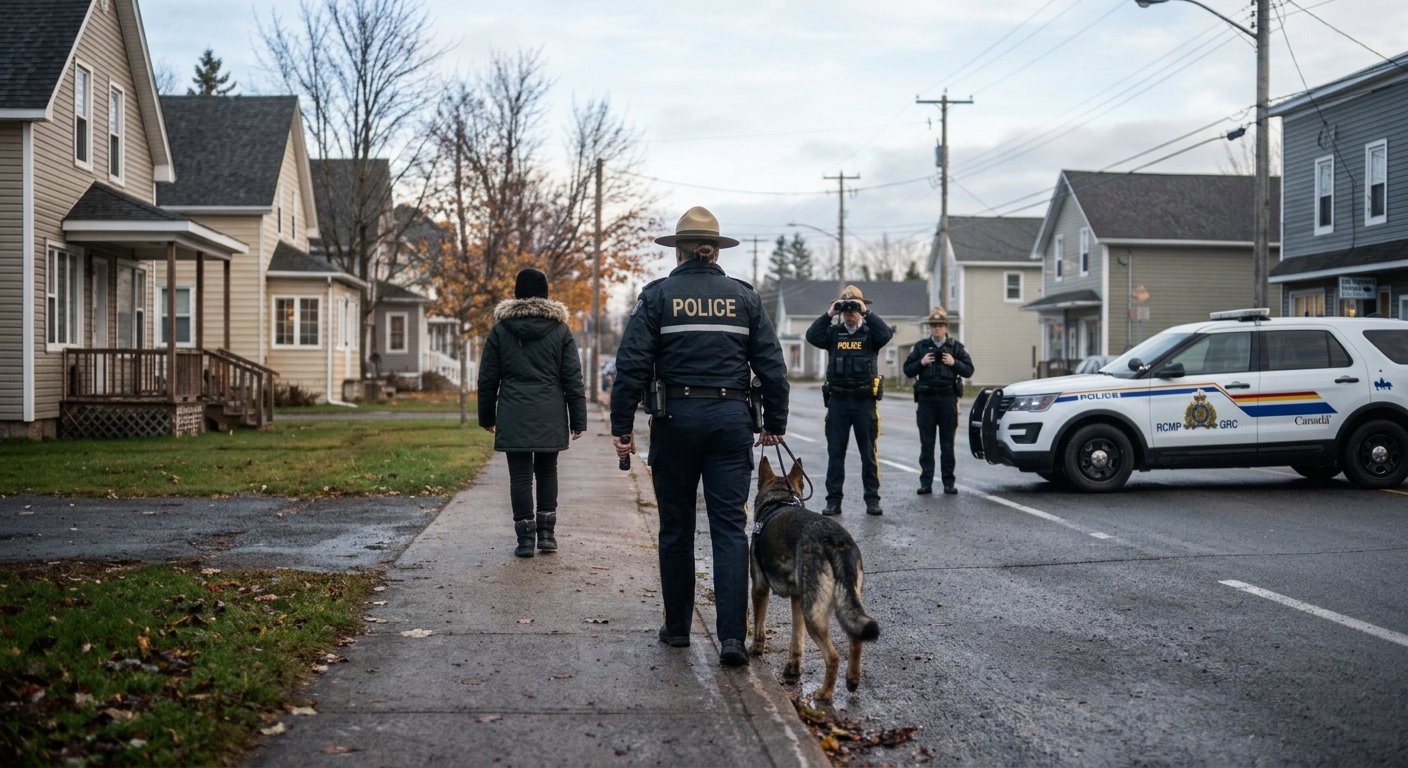

On August 4, 2023, during an encounter with the Royal Canadian Mounted Police (RCMP), Josie did what any person should have the fundamental right to do: she asserted her inherent right to be treated with dignity and respect under natural law. As an Indigenous woman, she spoke up about her rights, attempting to understand why she was being targeted, cornered, and treated with immediate, unprovoked hostility. Instead of receiving a measured, professional response from an officer sworn to uphold peace and justice, Josie’s assertion of her basic humanity was treated as a direct challenge to state authority. The officer escalated the interaction almost instantaneously, weaponizing institutional rhetoric by labelling her a "freeman"—a derogatory characterization intended to dismiss her identity, misclassify her standing, and strip away the legitimacy of her sovereign status as an Indigenous person.
When Josie attempted to document the encounter with her cellphone, the officer crossed an unacceptable boundary. He seized her device, eliminating any objective record of his conduct, and violently pulled her from her vehicle under the pretext of searching for her identification. It was during this escalation that the officer made a statement that has haunted Josie ever since: “This is Canada, I don’t need a reason.”
For an Indigenous woman, those eight words are terrifyingly familiar. They articulate the unspoken ethos of a colonial policing structure that has operated on Canadian soil for more than a century: the belief that the state possesses unlimited discretion, unchecked force, and an absolute exemption from accountability when dealing with Indigenous bodies. It declared, in no uncertain terms, that Josie had no right to dignity, no right to ask questions, and no right to expect constitutional protections.
The Anatomy of Institutional Neglect
Josie’s violent encounter on August 4, 2023, cannot be understood in isolation. It was not a localized misunderstanding or an isolated breach of protocol by a single "bad apple." For Josie, this roadside assault was the culmination of years of systemic police indifference and bureaucratic abandonment.
Since 2020, Josie had meticulously documented persistent, terrifying incidents of stalking, criminal harassment, and threatening communications directed at her personal safety. She did not act outside the system; she followed every procedure established by Canadian law. She compiled an extensive, chronological evidentiary file and formally submitted it to the RCMP in Prince Edward Island, pleading for a competent criminal investigation and meaningful protection.
Rather than receiving protection, Josie was met with an impenetrable wall of apathy and inaction. Her documented pleas were minimized, delayed, and effectively dismissed. This prolonged pattern of police neglect left her in a state of ongoing vulnerability, compounding her distress and leading to a terrifying reality: police inaction was providing de facto impunity to the perpetrators, allowing their harassing behaviour to escalate unchecked. When the RCMP finally encountered Josie on that August afternoon, the agency she had spent years appealing to for safety turned its coercive power directly against her. The institution tasked with providing a shield had become the sword.
The Historic Lineage of Colonial Policing
The trauma experienced by Josie connects directly to the founding purpose of the Royal Canadian Mounted Police. Created originally as the North-West Mounted Police (NWMP) in 1873, the force was designed not to deliver community-oriented safety, but to enforce Crown sovereignty over First Nations, Inuit, and Métis lands. The NWMP was deployed to suppress Indigenous resistance, clear traditional territories for railway construction and settlement, enforce starvation policies, and police reserve boundaries through the pass system.
Crucially, the RCMP was the enforcement arm tasked with tearing Indigenous children from their families and dragging them to residential schools. For generations of Indigenous families, the red serge has symbolized the state power that destroyed their communities and criminalized their existence. When an officer tells an Indigenous woman in 2023 that he "does not need a reason," he is channeling this long history of coercive policing.
This reality was central to the findings of the National Inquiry into Missing and Murdered Indigenous Women and Girls. The Inquiry’s final report made clear that the high levels of violence faced by Indigenous women, girls, and 2SLGBTQQIA+ people constitute an ongoing genocide facilitated by state complacency. In its 231 Calls for Justice, the Inquiry directly critiqued Canadian law enforcement for systemic apathy, widespread failure to investigate reports of violence made by Indigenous women, stereotyping, and excessive force. Josie’s struggle in PEI—documenting harassment for years only to be met with police indifference and roadside violence—is an example of how the systemic failures identified by the National Inquiry remain unresolved.
A Pattern of Parallels: Tina Fontaine and the Highway of Tears
Josie’s experience aligns with numerous high-profile cases across the country where police failure, indifference, and violence have had devastating consequences for Indigenous women.
In August 2014, 15-year-old Tina Fontaine, a member of the Sagkeeng First Nation, crossed paths with the Winnipeg Police Service while in the passenger seat of a vehicle driven by an older man. Despite her young age, her reported disappearance from state care, and her obvious vulnerability, the officers failed to take protective custody of her. A mere nine days later, Tina’s body was recovered from the Red River, wrapped in a duvet. Tina’s case shocked the country because it demonstrated how policing institutions often overlook vulnerable Indigenous youth. When Josie spent three years submitting reports of stalking to the PEI RCMP without meaningful intervention, she was caught in that same pattern of protective indifference.
This systemic dynamic extends across the country. Along British Columbia’s Highway 16, known internationally as the Highway of Tears, dozens of Indigenous women and girls have disappeared or been murdered over decades. For years, families noted that their reports were met with police dismissiveness, stereotyping, and delayed searches. In the landmark report Those Who Take Us Away: Abusive Policing and Failures in Protection of Indigenous Women and Girls in Northern British Columbia, Human Rights Watch compiled firsthand accounts detailing how RCMP officers engaged in abusive conduct, including arbitrary stops, physical abuse, and cross-gender strip searches conducted by male officers.
Human Rights Watch found that Indigenous women in northern B.C. were trapped in a double bind: they could not rely on the RCMP for protection when they were targeted by predators, yet they faced disproportionate police aggression and surveillance in their day-to-day lives. When Josie was forcibly removed from her vehicle after asserting her rights, she experienced that very same double standard: denied protection as a victim, yet targeted with force by the state.
The systemic refusal to properly investigate allegations brought forward by Indigenous women was also documented in the historic abuse cases in Prince George, B.C. Indigenous women and girls brought forward serious allegations of sexual exploitation and physical abuse, including claims against law enforcement members. Subsequent evaluations and reviews by the Civilian Review and Complaints Commission (CRCC) highlighted significant investigative failures by the RCMP, including the mishandling and loss of critical recorded evidence. This dynamic fuels deep-seated distrust among Indigenous women: the concern that reporting crimes to the RCMP may lead to evidence being ignored, lost, or dismissed.
Documented Abuse Across the Canadian North
The systemic mistreatment Josie encountered is further reflected in detailed studies and investigations across the Canadian North. A 2024 investigative report released by the Yellowknife Women's Society documented extensive mistreatment of homeless Indigenous women by the RCMP in the Northwest Territories. The report detailed how Indigenous women fleeing domestic violence, assault, or stalking who approached RCMP detachments for help were routinely ignored, turned away, or arrested themselves on charges like public intoxication or breach of the peace.
The Yellowknife report revealed that between 2018 and 2023, the local detachment faced 63 separate public complaints regarding excessive and inappropriate use of force. Every single one of these complaints was dismissed as "unsubstantiated" by the RCMP’s internal review mechanisms. The report concluded that self-investigation by the police creates a culture of complete institutional impunity, leaving Indigenous women with nowhere to report misconduct.
Similarly, investigations conducted by the Legal Services Board of Nunavut documented degrading, non-consensual strip searches of Inuit women held in RCMP cells, frequently conducted by male officers without proper oversight. Indigenous women reported being held down and physically stripped of their clothing after raising questions about their detention. When Josie was pulled from her vehicle after questioning an officer's authority, she was experiencing a familiar dynamic: any challenge to an officer's command is treated as a disciplinary violation warranting physical force.
The internal resistance to confronting anti-Indigenous racism inside the RCMP was made clear in a systemic racism class-action lawsuit filed by Margorie Hudson, an Indigenous former RCMP member who served for over three decades. Hudson described experiencing pervasive, unchecked racial harassment, stereotyping, and discriminatory treatment from fellow officers and senior leadership throughout her career. If an Indigenous woman wearing the uniform cannot find safety or institutional respect within the force, an Indigenous civilian on a roadside faces an even steeper uphill battle to receive fair and equitable treatment.
Formal Findings of Human Rights Violations Against the RCMP
The issues raised by Josie are supported by formal rulings and reports from human rights bodies:
A notable precedent is the decision by the Canadian Human Rights Tribunal in Woodgate et al. v. RCMP (2026 CHRT 15). In that case, six survivors from the Lake Babine First Nation brought forward human rights complaints regarding the RCMP's mishandling of an investigation into historical school abuse. The Tribunal substantiated the complaint, finding that the RCMP discriminated against the Indigenous complainants through reckless conduct and a failure to provide culturally competent, trauma-informed services.
Significantly, when the Tribunal ordered remedies, the federal Department of Justice intervened to challenge the ruling, arguing that police investigations should not be considered a "service" subject to the Canadian Human Rights Act. This legal strategy illustrates the lengths to which state institutions will go to shield themselves from human rights oversight. When Josie was told "I don't need a reason," she was encountering that very same institutional argument: that the police operate beyond the reach of standard human rights accountability.
Similarly, Amnesty International's report on Wet'suwet'en territory detailed the operations of the RCMP's Community-Industry Response Group (C-IRG). Indigenous women land defenders were subjected to arbitrary arrests, surveillance, and armed raids on their ancestral lands. Amnesty International found these actions violated the UN Declaration on the Rights of Indigenous Peoples (UNDRIP), demonstrating how the state criminalizes Indigenous sovereignty rather than respecting natural law.
The Weaponization of the "Freeman" Label
A telling detail of Josie’s encounter was the officer’s decision to label her a "freeman." In Canadian policing and legal contexts, the term "freeman-on-the-land" refers to an anti-government ideological movement that relies on pseudolegal arguments to claim immunity from Canadian laws, taxes, and courts. By applying this label to Josie, the officer used an intentional tactic of delegitimization.
Josie was not invoking pseudolegal theories to avoid civic responsibilities. She was asserting her inherent human dignity and referencing natural law as an Indigenous woman. The concepts of natural law, original sovereignty, and inherent human rights are recognized legal and philosophical frameworks across First Nations, affirmed by international conventions such as UNDRIP and recognized in Canadian jurisprudence under Section 35 of the Constitution Act, 1982.
Conflating an Indigenous woman's assertion of inherent dignity with an anti-government movement allows an officer to redefine a human rights appeal as a potential threat to officer safety. Under standard police operational training, individuals associated with the "freeman" ideology are viewed as hostile, non-compliant, and unpredictable. By applying that label to Josie, the officer created an administrative pretext to escalate force, seize her recording device, and violently remove her from the car. It reframes an Indigenous woman's legitimate demand for respect into an act of insubordination that warrants physical restraint.
The Illusion of Accountability
Josie’s experience raises fundamental questions about the mechanisms available to hold the RCMP accountable. Under the current legislative framework, when an individual experiences misconduct at the hands of an RCMP officer, the initial complaint is processed through the Civilian Review and Complaints Commission (CRCC). However, the structure of the Royal Canadian Mounted Police Act dictates that complaints are often referred right back to the RCMP for initial investigation.
This system of self-investigation has drawn widespread criticism from Indigenous leaders, human rights organizations, and legal scholars. A police service investigating its own members presents an inherent conflict of interest. The findings from the Yellowknife Women’s Society report—where all 63 excessive use-of-force complaints were dismissed internally—show how this system operates in practice. For an Indigenous woman, filing an internal complaint often feels futile, and many fear it may lead to surveillance or police retaliation.
This lack of effective civilian oversight makes incidents like Josie's roadside stop possible. When an officer believes there is no real threat of external scrutiny, saying "This is Canada, I don't need a reason" is not an emotional outburst; it reflects the functional reality of their daily authority.
The Core Question: Where Are Indigenous Women Supposed to Turn?
Josie’s encounter cuts to the heart of the crisis in Canadian policing. It connects an individual interaction on a roadside to a documented legacy of institutional violence, from the residential school system to the human rights violations detailed in Woodgate et al. and the findings of Human Rights Watch.
Her case challenges the narrative that systemic racism within Canadian law enforcement is an issue of the past, addressed by internal sensitivity workshops or land acknowledgements. In August 2023, an Indigenous woman seeking protection from ongoing harassment was met with physical violence, the seizure of her property, and the statement that law enforcement owes her no explanation.
This reality demands concrete reforms:
Truly Independent Civilian Oversight: Removing the RCMP entirely from the process of investigating complaints against its own members, replacing it with an independent civilian body empowered to issue binding disciplinary rulings.
Accountability for Neglected Investigations: Establishing external oversight to investigate instances where police detachments fail to act on reports of stalking, harassment, and domestic threats brought forward by Indigenous women.
Respect for Inherent Indigenous Rights: Ensuring that the assertion of inherent human dignity and sovereign rights by an Indigenous person is never used by law enforcement as a pretext for threat escalation or physical force.
If an Indigenous woman cannot document an interaction with an armed officer without having her property seized, if she cannot invoke her inherent dignity without being labelled an extremist, and if she cannot report ongoing stalking for years without being ignored, the justice system is broken.
Josie’s experience poses a question that Canadian society and its institutions must answer: When the police treat an Indigenous woman’s demand for basic respect as an offence, where is she supposed to turn for protection?

Comments
There are 0 comments on this post