
How Québec’s human rights system became a fortress of systemic exclusion


The foundational promise of any democratic administrative justice system is simple, universal, and non-negotiable: it must offer an accessible, neutral, and empathetic arena where the marginalized can hold institutional power to account. For human rights tribunals, this mandate is even more sacred. These bodies exist explicitly because traditional courts are often too expensive, too formal, and too structurally rigid for an ordinary citizen facing discrimination to navigate. They are meant to be shields for the vulnerable.
Yet, an examination of the compounding systemic crises within Québec’s human rights framework reveals that this promise is being systematically dismantled. What was built to protect citizens from discrimination has instead manifested into a bureaucratic fortress, insulated by political ideology and increasingly hostile to the very linguistic and racial minorities it is legislated to defend. Far from acting as a corrective mechanism against discrimination, Québec’s human rights apparatus has become an instrument of the state’s broader resistance to equity, evolving into an architecture of structural exclusion.
The Linguistic Iron Curtain: Ontario vs. Québec
To understand how far Québec’s system has drifted from the core tenets of modern administrative justice, one only needs to look across the provincial border. The Human Rights Tribunal of Ontario (HRTO) operates under an explicit access-to-justice mandate. Recognizing that language is the very medium through which rights are articulated and defended, the HRTO provides state-funded interpreter services in more than 100 languages. In Ontario, the policy acknowledges a fundamental legal truth: if a claimant, a respondent, or a critical witness cannot fully understand or communicate during a proceeding, justice is not merely delayed—it is entirely denied.
Cross the Ottawa River, and the administrative landscape shifts into something far more punitive. The Québec Tribunal des droits de la personne (TDP) operates within a rigid, unyielding linguistic framework that treats language accommodation not as a tool for equity, but as a threat to provincial identity. Under the province's current legal frameworks, English-speaking minority claimants retain a technical, constitutional right to plead their case in English. However, the state adamantly refuses to fund interpretation or translation services for civil and administrative hearings.
This creates a devastating barrier for self-represented or low-income Anglo-Québeckers. If an English-speaking claimant requires a translator to understand the French testimony of a defendant, or if a vital English-speaking witness needs to be understood by a French-speaking judge, the financial burden falls entirely on the individual. In practice, this forces marginalized individuals to secure and pay for professional translation services out of their own pockets. It is a financial penalty levied against language choice—a structural barrier masquerading as cultural preservation, ensuring that those without significant financial resources are effectively silenced before the law.
The Carby-Samuels Precedent and the Weaponization of Procedure
This procedural hostility is not restricted to language barriers; it extends to the very handling of civil and religious rights when they collide with state institutions. This dynamic was starkly exposed by the protracted legal saga of the Carby-Samuels litigation, a case that has sent a chilling ripple effect through Québec’s civil liberties advocacy circles.
Raymond Carby-Samuels, a Black Jewish human rights claimant, brought forward a $44,000 racial profiling complaint against the Ville de Gatineau, alleging systemic bias by municipal authorities. Throughout the grueling legal process, Carby-Samuels sought what should have been routine accommodations for his religious and linguistic realities. Most notably, this included a formal request to adjust a hearing schedule, backed by a written note from his rabbi explaining that he could not attend due to mandatory religious observances. Concurrently, filings indicate that the claimant sought to utilize structural procedures, such as a Motion of Disavowal, to address fundamental breakdowns in his legal representation and procedural fairness.
Rather than receiving the objective evaluation and accommodation mandated by basic human rights principles, the claimant’s persistent demands for his civil rights were pathologized by the judicial system. The court environment grew increasingly adversarial, treating the claimant’s insistence on his protected rights as an indicator of a "quarrelsome" and disruptive nature.
The culmination of this institutional hostility occurred in May of this year, when the Québec Superior Court officially designated Carby-Samuels a "vexatious litigant." This sweeping, extraordinary judicial order completely froze his active, CDPDJ-endorsed racial profiling claim against Gatineau. Furthermore, it barred him from filing any future claims or accessing provincial administrative bodies without obtaining prior written permission from a judge.
By utilizing the "vexatious litigant" designation to silence a marginalized claimant, the judiciary did something profoundly dangerous: it signaled to municipal institutions and police forces that they are effectively insulated from civil rights accountability if they can successfully outlast and exhaust a claimant. When a citizen’s rigorous defense of their religious and civil liberties is twisted by judges to strip them of their right to sue, the tribunal ceases to be a court of human rights and becomes a court of state compliance.
The Gatekeeper Monopoly and the Rot Within the CDPDJ
This breakdown of justice is further compounded by the absolute structural monopoly held by the Commission des droits de la personne et des droits de la jeunesse (CDPDJ). In several other Canadian provinces, human rights frameworks allow a degree of direct access; if a provincial commission dismisses a case or delays it indefinitely, a claimant often has pathways to bypass the commission and take their grievances directly to a tribunal for an independent judicial review.
In Québec, no such escape valve exists. The CDPDJ acts as an absolute, uncompromising gatekeeper. It possesses an exclusive monopoly over the human rights pipeline; individuals cannot have their cases judicially reviewed by the Tribunal unless the Commission explicitly decides to refer the case forward. This centralized bottleneck has left the Québec public trapped in an endless loop of bureaucratic inertia, defined by years-long delays, opaque investigative processes, and summarily closed files. For a victim of discrimination, filing a complaint with the CDPDJ feels less like seeking justice and more like sending a message into a black hole.
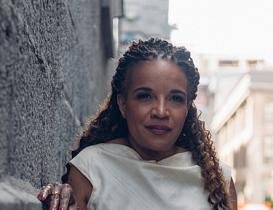
More damning than the Commission’s structural inefficiency, however, is the revelation that the very institution tasked with dismantling racism in Québec is itself rotting from an internal culture of prejudice. The historical public reckoning of Tamara Thermitus—the CDPDJ’s first Black female president—shattered any illusions of institutional innocence. Thermitus, a highly respected legal professional, went public with harrowing details of her tenure, exposing a toxic internal environment where she faced fierce institutional resistance, microaggressions, and overt racism from her own colleagues and subordinates within the Commission.
The campaign against Thermitus was not merely an interpersonal conflict; it was a structural immune response by an insular bureaucracy rejecting leadership that sought genuine racial equity. She was ultimately driven out of her position. When the statutory watchdog responsible for policing systemic discrimination practices that very discrimination within its own executive suites, the entire provincial apparatus loses its moral authority. The CDPDJ cannot effectively protect the public from a poison it actively brews within its own walls.
Systemic Racism and the Mirage of the "Distinct Society"
None of these institutional failures occur in a vacuum. The rot within the Human Rights Tribunal and the CDPDJ is the predictable, direct symptom of a broader political environment engineered by the highest levels of the Québec government. For years, the provincial leadership has dogmatically and aggressively refused to even acknowledge the explicit existence of systemic racism within its public institutions. To the current political class, the term "systemic racism" is viewed not as a sociological reality to be remedied, but as a political liability—an insult to the Québécois identity that must be denied at all costs.
By denying the existence of the system's flaws, the government has given public institutions, police forces, and administrative tribunals a blank check to ignore the disparate impacts of their policies on minority populations. Under the defensive banner of protecting a "distinct society," the province has passed sweeping, highly controversial legislative overhauls such as Bill 96. While framed as a benign effort to protect the French language, these laws have systematically restricted access to healthcare, education, and legal services for those who do not fit into the state’s narrow definition of the majority.
In doing so, Québec has codified a two-tiered system of citizenship. The pursuit of a culturally homogeneous "distinct society" has manifested, in practice, into a distinct society of systemic exclusion. The Human Rights Tribunal and the CDPDJ have become casualties of this overriding provincial ideology. Hamstrung by legislative mandates that prioritize nationalist protectionism over universal human rights, and staffed by an insular bureaucracy that mirrors the government's denialism, these bodies are incapable of self-correction.
When a human rights tribunal is transformed into a mechanism through which minority language access is penalized, religious accommodations are criminalized as vexatious, and racialized leaders are systematically purged, it has fully inverted its purpose. It is no longer a shield for the vulnerable against the overreach of the majority. It has become a highly sophisticated, legally sanctioned weapon of the state. Until Québec confronts the reality of its institutional biases, its human rights system will remain a fortress designed not to deliver justice, but to keep the marginalized firmly outside the gates.

Comments
There are 0 comments on this post