
Donald Trump’s rerrifying metamorphosis: From Deep State critic to unhinged dictator and Nuclear War fatalist
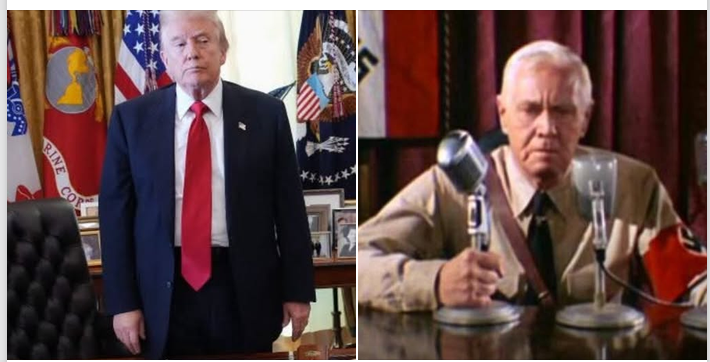

For years, the central appeal of Donald Trump’s political movement rested on a simple, populist premise: he was a rugged outsider standing between ordinary citizens and a shadowy, unaccountable establishment. During his first presidency—a period that stands in stark contrast to the man Ontario Premier Doug Ford has recently slammed as a "dictator" and "bully" amid collapsed trade talks—Trump frequently framed himself as a man battling unseen forces behind the curtain of American power. Through longtime confidants and political operatives like Roger Stone, the public heard repeated, urgent warnings about "they." When pressed on why he held back thousands of classified records regarding the assassination of President John F. Kennedy, Stone recounted that Trump refused to elaborate, insisting the truth was "so horrible you wouldn't believe it" and pointing to the immense behind-the-scenes pressure exerted by "they" to keep the public in the dark.
To millions of supporters, that posture defined him. What Premier Ford and international observers now refer to as "Trump 1" was viewed as a disruptor who feared the machinery of the Deep State, distrusted the intelligence community, and understood the catastrophic stakes of global conflict. Even his fiercest critics during that era largely saw him as a transactional figure—a New York real estate mogul motivated by ratings, applause, personal enrichment, and a desire to avoid costly foreign quagmires that might tarnish his brand.
Today, however, observers across the entire political spectrum—including leaders like Ford, who has publicly warned that the second-term president "can't be trusted" and constantly moves the goalposts—are struggling to reconcile that earlier figure with the leader who emerged following his January 2025 inauguration. Looking at the trajectory of "Trump 2," the transformation appears far more radical than a mere shift in policy or governing style. It is a stark, Dr. Jekyll and Mr. Hyde-like metamorphosis from a skeptical Deep State critic into an unhinged dictator and nuclear war fatalist.
The Erosion of the Anti-Establishment Outsider
To appreciate the sheer scale of this transformation, one must revisit the political identity Trump cultivated between 2015 and 2021. Back then, his rallies were built around a core promise: he would dismantle the permanent bureaucracy in Washington, expose hidden cabals, and bring an end to the era of endless foreign wars. When Roger Stone appeared on broadcasts in 2017 and again in 2023 to recount his private conversations with the president, he painted a picture of a leader who felt cornered by intelligence agencies—specifically naming officials who warned him that releasing the remaining JFK files would destabilize the state. In Stone’s telling, Trump was a man who wanted the truth out, who spoke in hushed, almost fearful tones about what "they" would not allow him to say, and who positioned himself as a reluctant captive of institutional guardrails.
During those years, Trump 1 also maintained a consistent, self-preserving restraint regarding sovereign allies and global flashpoints. While he used sharp rhetoric to renegotiate trade deals like NAFTA into the USMCA, he respected the fundamental sovereignty of neighboring nations and repeatedly boasted that he was the first president in decades not to start a new foreign war. He portrayed himself as a dealmaker who valued stability because stability was good for business, good for the stock market, and good for his personal legacy.
Yet the moment the transition into Trump 2 began in late 2024 and accelerated after his second inauguration on January 20, 2025, that cautious dealmaker vanished without a trace. In his place stood a ruler who no longer whispered warnings about "they," because he had effectively absorbed their darkest impulses. Rather than dismantling the machinery of state coercion, he turned it outward against allies and inward against dissent. Sovereign nations like Canada—America’s closest friend and trading partner—suddenly found themselves subjected to aggressive economic warfare and explicit threats of annexation as the "51st state." Greenland, an autonomous territory of a NATO ally, became the target of blunt imperial demands, with Trump declaring U.S. ownership and control an "absolute necessity." The man who once campaigned against globalist overreach had overnight become an expansionist autocrat.
The Liberal Media’s Blind Spot: Mistaking Methodical Malice for Senility
What makes the current crisis even more perilous is the sheer intellectual laziness of mainstream liberal commentators who continue to misdiagnose what is happening before their eyes. Night after night, cable news panels and liberal bloggers comfort themselves with a tired, recycled talking point: that Trump 2 is simply "insane," suffering from age-related cognitive dysfunction, or slipping into the exact kind of senility they spent years denying—and later lamenting—in Joe Biden.
To equate Trump 2’s ruthless, systematic consolidation of power with Biden’s meandering verbal stumbles is laughable. Senility does not execute a coordinated, multi-front dismantling of constitutional checks and balances. Cognitive decline does not methodically neutralize institutional opposition, weaponize trade against historic allies, and maneuver the world’s largest military toward a nuclear standoff while keeping domestic critics perpetually off-balance.
Far from being the erratic flailing of a failing mind, what we appear to be witnessing are the workings of a calculated and methodical intelligence—one with the chilling capacity to stage-manage its own perceived madness. By babbling in meandering weaves, projecting theatrical incoherence, and playing the role of the eccentric, aging strongman, this intelligence deliberately manufactures the appearance of mental incapacity to disarm its critics. While liberal pundits smugly chuckle over his syntax, clip his gaffes for late-night monologues, and wait passively for nature or the 25th Amendment to take its course, the underlying machinery marches forward unimpeded. Feigning madness to lull adversaries into underestimating a ruthless design is one of the oldest tactics in the authoritarian playbook—and the mainstream press has fallen for it hook, line, and sinker.
The Melakon Parallel: When the Puppeteer Replaces the Leader
To understand how jarring and dangerous this shift has become, sharper internet commentators and political observers have turned away from cable news clichés and looked instead to a classic allegory from the 1968 Star Trek episode "Patterns of Force." In the episode, a respected Federation historian named John Gill travels to a chaotic, war-torn planet called Ekos, hoping to restore stability by borrowing the organizational efficiency of mid-twentieth-century authoritarianism. Gill believes he can control the dark forces he is unleashing, using the aesthetics of strongman rule purely as a pragmatic tool to bring order to a fractured society.
Instead of mastering the system, however, Gill is drugged, hollowed out, and reduced to a vacant, glassy-eyed figurehead by his ruthless deputy, Melakon. Operating from the shadows while wearing Gill’s authority like a mask, Melakon hijacks the leader’s voice, drugs him into a state of compliant stupor, and uses the historian’s image to enforce a brutal regime of racial supremacy, territorial conquest, and relentless war against neighboring planets. When Captain Kirk and Mr. Spock finally reach Gill, they discover that the man speaking to the masses is no longer in command of his own mind; his spirit has been extinguished, leaving behind a hollow shell broadcasting the cold, methodical commands of a fanatic.
Online pundits drawing comparisons between Melakon, John Gill, and the White House argue that the chasm between Trump 1 and Trump 2 feels less like natural political evolution and more like a wholesale personality replacement. The man who once campaigned against foreign entanglements and warned of hidden cabals returned to office speaking casually of annexing sovereign neighbors, dismantling institutional guardrails, and wielding sweeping, unchecked executive power. He has embraced the very architecture of totalitarian state control he once claimed to oppose—becoming an incarnation of the exact "they" he used to warn the public about. Watching his public appearances in his second term, critics note a chilling duality: the theatrical, seemingly bumbling bluster remains as a smokescreen, while behind his eyes operates a cold, calculating Melakon driving relentlessly toward conquest.
From Hedonistic Survivor to Nuclear Fatalist
Nowhere is this terrifying metamorphosis more alarming than in the realm of war and nuclear brinkmanship.
In his first term, Trump 1 was famously—and arguably—hedonistic: a man obsessed with wealth, skyscrapers, gold-plated luxury, personal legacy, and physical survival. Whatever his flaws, his worldview was anchored in a deeply human, almost primal instinct for self-preservation. He loved life, he loved his possessions, and he loved the spectacle of his own success. Throughout his first presidency, he repeatedly warned that nuclear weapons represented the single greatest threat to human existence—the "ultimate catastrophe" that would wipe out everything humanity had built. He boasted of keeping America out of catastrophic foreign wars, engaged in direct diplomacy with adversaries like North Korea specifically to avert nuclear exchange, and understood instinctively that nuclear conflict meant total obliteration—including for himself, his family, and his empire.
Yet according to Tucker Carlson, one of his fiercest former champions, the man occupying the Oval Office bears no resemblance to that self-preserving pragmatist. Recounting a chilling private Oval Office confrontation over war with Iran and the looming specter of offensive nuclear strikes, Carlson revealed in a widely circulated interview that when he warned Trump of the catastrophic consequences for the country, human civilization, and future generations, Trump offered a cold, nihilistic shrug: "Yes, you're right. But in the end, we all die anyway, so it doesn't matter."
Read those words again. "In the end, we all die anyway, so it doesn't matter."
That is not the rambling of a confused old man experiencing a "Biden moment." That is the cold, lucid declaration of a nihilist who has detached entirely from human survival. When a commander-in-chief openly embraces a death-wish fatalism—treating nuclear Armageddon not as an unthinkable horror to be avoided at all costs, but as a casual, indifferent inevitability—it signals something far deeper and more sinister than a hawkish foreign policy pivot. It sounds like the expression of a voice that no longer originates from his own spirit.
A hedonist wants to live; a builder wants his monuments to stand; a father and grandfather wants his bloodline to endure. A dictator who casually dismisses the survival of humanity with a shrug is operating under an entirely different imperative—one completely divorced from normal human attachment or survival instinct. It represents the ultimate inversion of Trump 1’s worldview: moving from a man who feared nuclear winter above all else to a fatalist who treats the incineration of millions as a trivial footnote.
"Possessed": Why His Closest Allies Are Sounding the Alarm
What makes this Dr. Jekyll and Mr. Hyde transformation truly unsettling is that it has terrified the very people who know him personally and helped build his movement—people who refuse to buy into the liberal media’s comforting fairy tale of simple cognitive decline.
Even a devout MAGA supporter like Alex Jones, who previously served as one of Trump’s fiercest defenders and a primary conduit for his anti-establishment messaging, recently took to his broadcast to break with the president and call for his impeachment. Struggling to make sense of how a leader could casually disregard the implications of mass deaths from nuclear war, Jones began to openly speculate whether Trump is being "possessed" or manipulated by some kind of technological, drug-induced, or otherworldly alien control—something forcing him to behave in ways that no human leader in recorded history has ever been documented to behave.
Jones’s stunned reaction highlights just how absurd the mainstream "Biden-style senility" narrative truly is. When a broadcaster who spent a decade defending Trump against every conceivable accusation looks at the president’s actions and concludes that he is being driven by an external technological, pharmacological, or spiritual force—an intelligence wholly alien to human self-preservation—it underscores the sheer unnaturalness of the shift. Carlson himself was so shaken by Trump’s hollow indifference to mass annihilation that he broke ranks entirely, publicly urging the cabinet to remove him from office immediately. When a president’s most ardent media defenders conclude that the man they knew has vanished—replaced by an entity indifferent to nuclear winter—the warning signs can no longer be dismissed as partisan hyperbole or geriatric decline.
The Architecture of Takeover: John Kelly’s Warning and the "Nazification" of Trump
This sense of an internal takeover echoes warnings issued earlier by high-ranking members of his own first administration. Before Trump’s return to power, his former White House Chief of Staff, retired Marine General John Kelly, broke his silence to sound the alarm that Trump exhibited a growing admiration for authoritarian rule, praised Hitler’s generals, and met the definition of a fascist. At the time, many voters dismissed Kelly’s warning as the bitterness of a former aide. In hindsight, Kelly was documenting the early stages of a profound psychological and ideological metamorphosis.
Viewed through the lens of Patterns of Force, critics see a terrifying parallel to John Gill’s tragic arc. Like Gill, Trump 1 initially toyed with authoritarian aesthetics and nationalist grievances for political leverage, believing he remained in control of the machine. He admired the strength of foreign autocrats from afar while still operating within the basic framework of American transactional politics. Over time, however, that flirtation curdled into total ideological capture.
That progressive "Nazification" of his political persona—marked by growing paranoia in his unguarded moments, an obsession with absolute personal loyalty, contempt for constitutional limits, and a fixation on conquering neighboring lands—gradually hollowed out the transactional dealmaker who first rode down the golden escalator in 2015. Just as Gill’s mind deteriorated under the influence of Melakon’s regime until paranoia and cruelty became his default state, Trump’s prolonged immersion in grievance and unchecked power appears to have eroded whatever human restraints once held him back. By the time he took the oath of office in January 2025, the takeover appeared complete. The pragmatic self-interest of Trump 1 was gone, leaving behind a methodical, dictatorial vessel marching relentlessly toward domestic authoritarianism and global ruin.
Ancient Warnings: Credo Mutwa and the Hijacking of Rulers
Across human history, cultures have wrestled with how to explain sudden, inexplicable shifts in the temperament and morality of powerful rulers—especially when a leader abruptly turns against the survival of their own people. Modern political science uses clinical terms like radicalization, authoritarian drift, or institutional capture, while television writers reach for science fiction allegories like Melakon and Patterns of Force.
Long before modern psychology or television existed, indigenous traditions preserved their own frameworks for understanding this phenomenon. In traditional African lore, the late Zulu sangoma, author, and historian Credo Mutwa spoke extensively of ancient tribal traditions warning against the Chitauri—malevolent, parasitic beings said to infiltrate human societies by hijacking the minds and bodies of kings, chiefs, and rulers. According to the folklore Mutwa preserved, ancient tribes were hyper-vigilant for signs that a once-protective leader had been overtaken, transformed overnight into a cold, tyrannical instrument of division, territorial conquest, and mass destruction.
In those ancient accounts, the unmistakable sign of such a takeover was when a ruler abandoned the sacred duty of preserving the tribe, turned violently against peaceful neighbours, and spoke with a chilling disregard for human life. To ancient storytellers, such lore served as a vital cautionary framework whenever a sovereign ceased to value human existence and began serving an alien, apocalyptic agenda—a reminder that the greatest danger to a civilization arises when the person sitting on the throne no longer shares the humanity of the people below.
Drawing Our Own Conclusions at the Brink
Whether one views the chasm between Trump 1 and Trump 2 through the lens of political science, insider testimony, classic television allegory, or ancient folklore, the underlying reality remains inescapable.
We are witnessing a transformation without modern precedent. How does a hedonistic dealmaker who once feared nuclear war, respected the sovereignty of allies, and warned relentlessly against "they" re-emerge in a Dr. Jekyll and Mr. Hyde twist as a calculated autocrat threatening peaceful nations, weaponizing perceived incoherence to disarm his critics, and casually dismissing the survival of our children and grandchildren with "we all die anyway"?
You do not need to believe in science fiction mind-control, secret neurological technology, or ancient legends to recognize the danger staring the world in the face. The evidence is written in his own words, documented in the collapsed alliances noted by leaders like Doug Ford, confirmed by the warnings of his former chiefs of staff, and testified to by his closest former allies like Tucker Carlson and Alex Jones. Something fundamental—and fiercely methodical—has taken command inside the Oval Office, stripping away every vestige of self-preservation and restraint while the mainstream media laughs at the mask. As the world stands on the nuclear brink, the public—and those entrusted with constitutional guardrails—are left to confront the record and draw their own conclusions about who, or what, is truly holding the nuclear football.

Comments
There are 0 comments on this post